Joyor S10-S-Z · Tyres & wheels
Tyre is worn or cracked
When the tread knobs are nearly flat or the rubber cracks, grip drops fast, especially in the wet.
Is this your problem?
- Knobs on the tread are low or gone in the middle
- Small cracks on the sidewall
- Sliding on wet roads
Likely causes
Compare the middle of the tread with the edges. Look for cords showing through anywhere: that tyre must be replaced now.
What you need
Tools
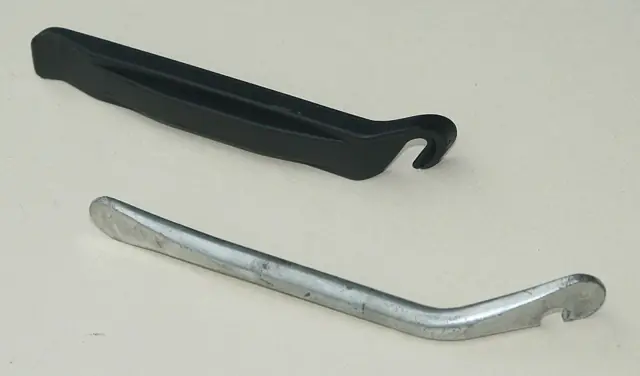 Example photo
Plastic levers are kinder to the rim. Small scooter tyres are tight, so a strong nylon or steel-core pair helps.
Photo: Ian Harvey, Public domain, resized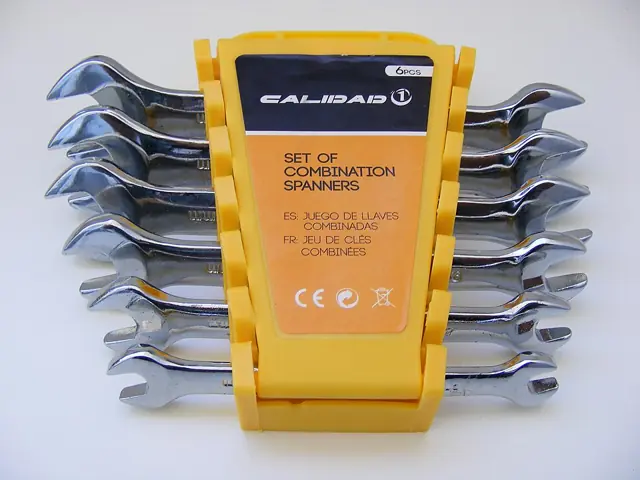 Example photo
Metric. The axle nuts on 10-inch scooters are usually big (often 18 mm or more): measure yours before buying.
Photo: Fructibus, CC0, resized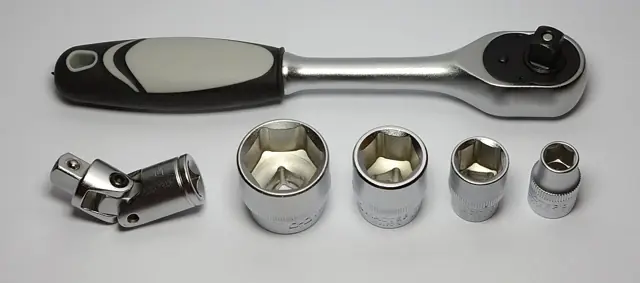 Example photo
Metric sockets. A deep socket helps on axle nuts that sit on a long thread.
Photo: Kae, CC BY-SA 3.0, resized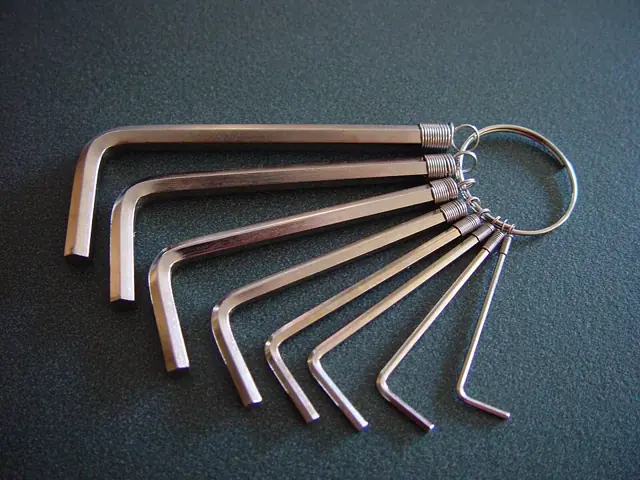 Example photo
A metric set, roughly 2 mm to 8 mm. Long-arm keys reach the recessed bolts on the stem and deck.
Photo: Leon Brooks, Public domain, resized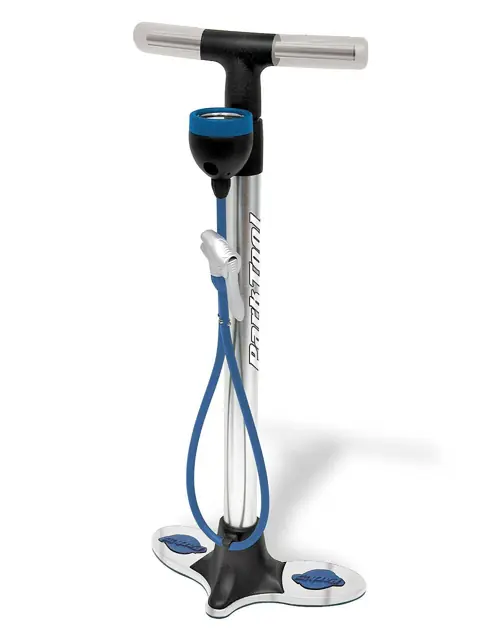 Example photo
A floor pump with a gauge. Scooters like this one normally have a car-style (Schrader) valve: check yours and make sure the pump head fits it.
Photo: Ewok Slayer, Public domain, resized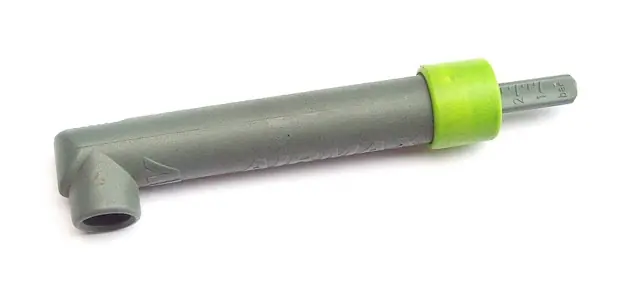 Example photo
Any gauge that fits your valve. The gauge on a cheap pump can be off by a lot, so a separate one is worth it.
Photo: Simon Speed, CC0, resizedParts
 Example photo
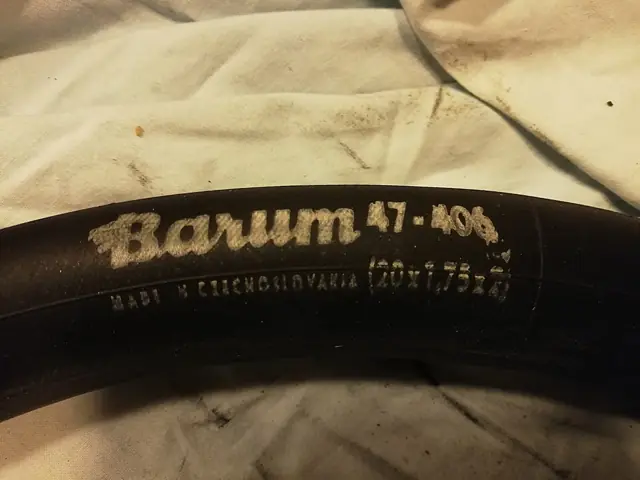
Size 10 × 3 (also sold as 255 × 80 or 80/65-6), with a bent valve like your old one. Copy the size and valve from the old tube.
Photo: Oostblokblik, CC BY-SA 4.0, resizedPhotos show the kind of tool or part, not a specific product. We don’t sell anything and get nothing from any shop.
Step by step
Tap a step when it’s done to keep your place.
- Get the right tyre
Same size as yours: 10 × 3 (255 × 80 / 80/65-6), tubed, off-road tread. Joyor sells one listed for this model.
- Remove the wheel
Exactly as in the flat-tyre guide, steps 1–5.
- Fit the new tyre with a new tube
A new tyre is stiffer than the old one. Warm it in the sun first, and use soapy water on the bead.
- Seat, inflate, refit and test
As in the flat-tyre guide, steps 9–11.
Stay safe
- New tyres can be slippery for the first few km.
When to take it to a shop
If you cannot get the new tyre on; it can be really stiff.